

Travertine has outlasted every trend that was meant to replace it, and it is once again at the centre of how considered homes are being specified.
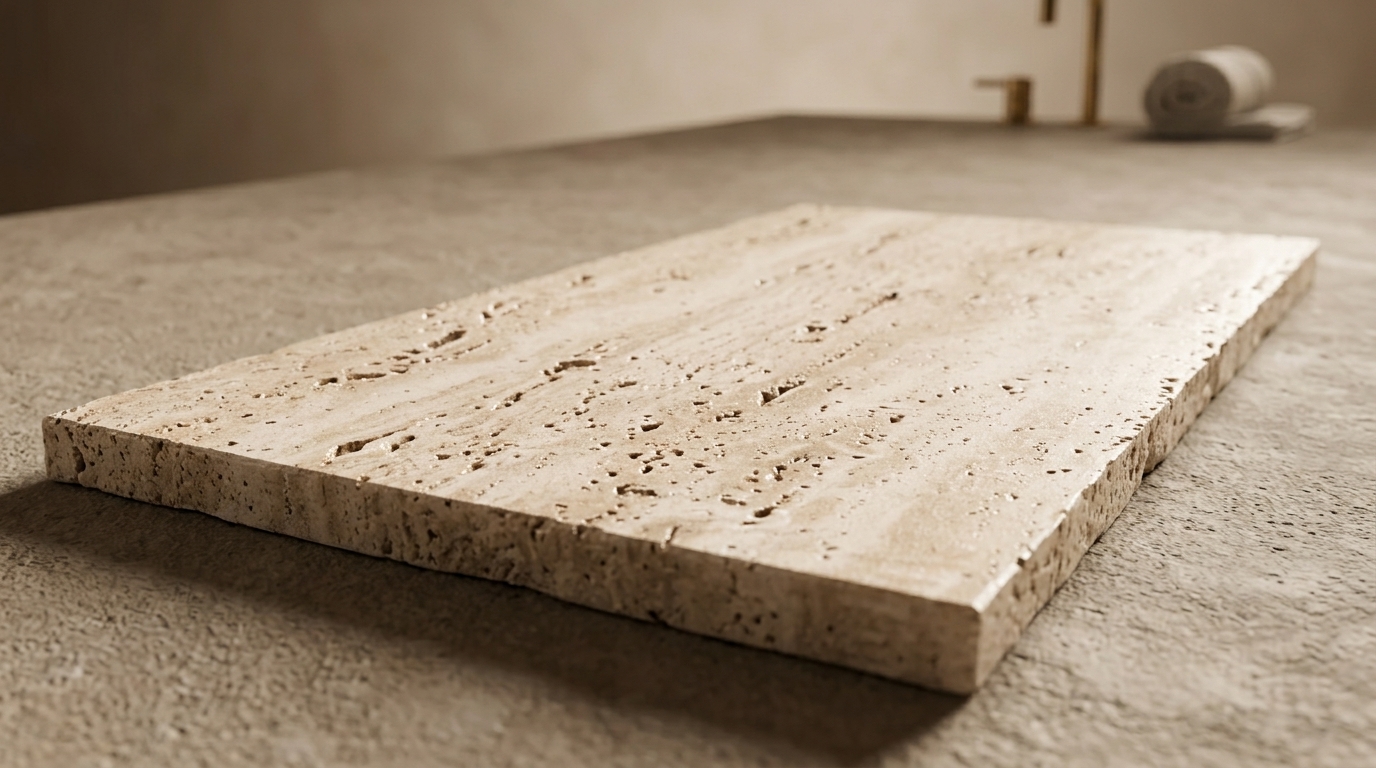
Formed over millennia, travertine carries its history on the surface: soft veining, natural voids and a warmth that no printed surface has fully captured. It has built the Roman Colosseum and shaped modern landmarks, and today it is returning to Australian homes in a more refined, more architectural form.
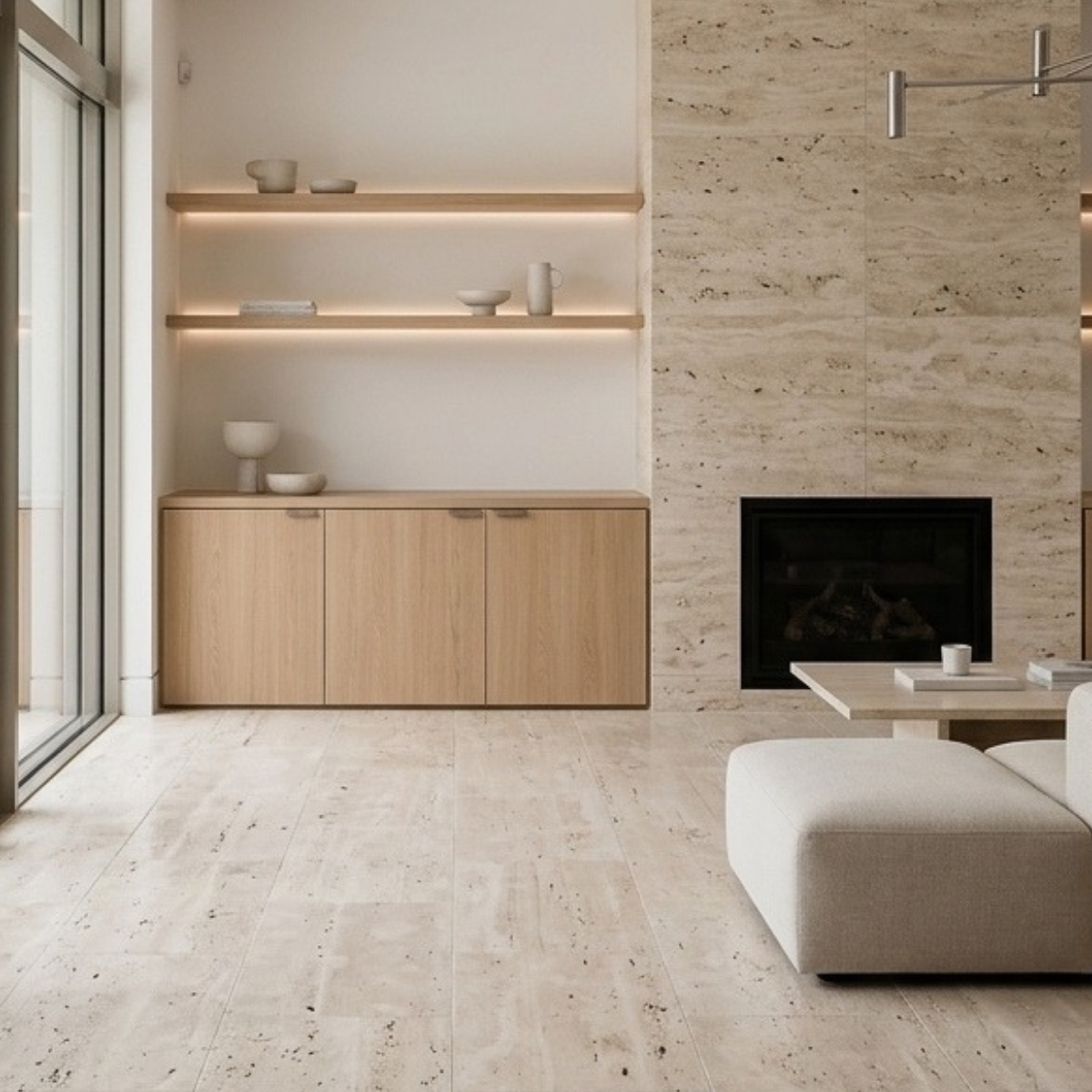
The appeal is not nostalgia. It is restraint: a neutral, tactile material that grounds a space, softens strong lines and gives contemporary interiors the depth they can otherwise lack. For architects and designers, it offers something rare, a surface that feels timeless without feeling traditional.
Travertine does not chase the moment. It sets the tone the rest of the room can follow.
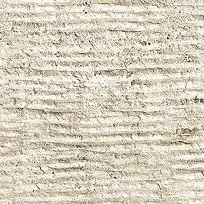
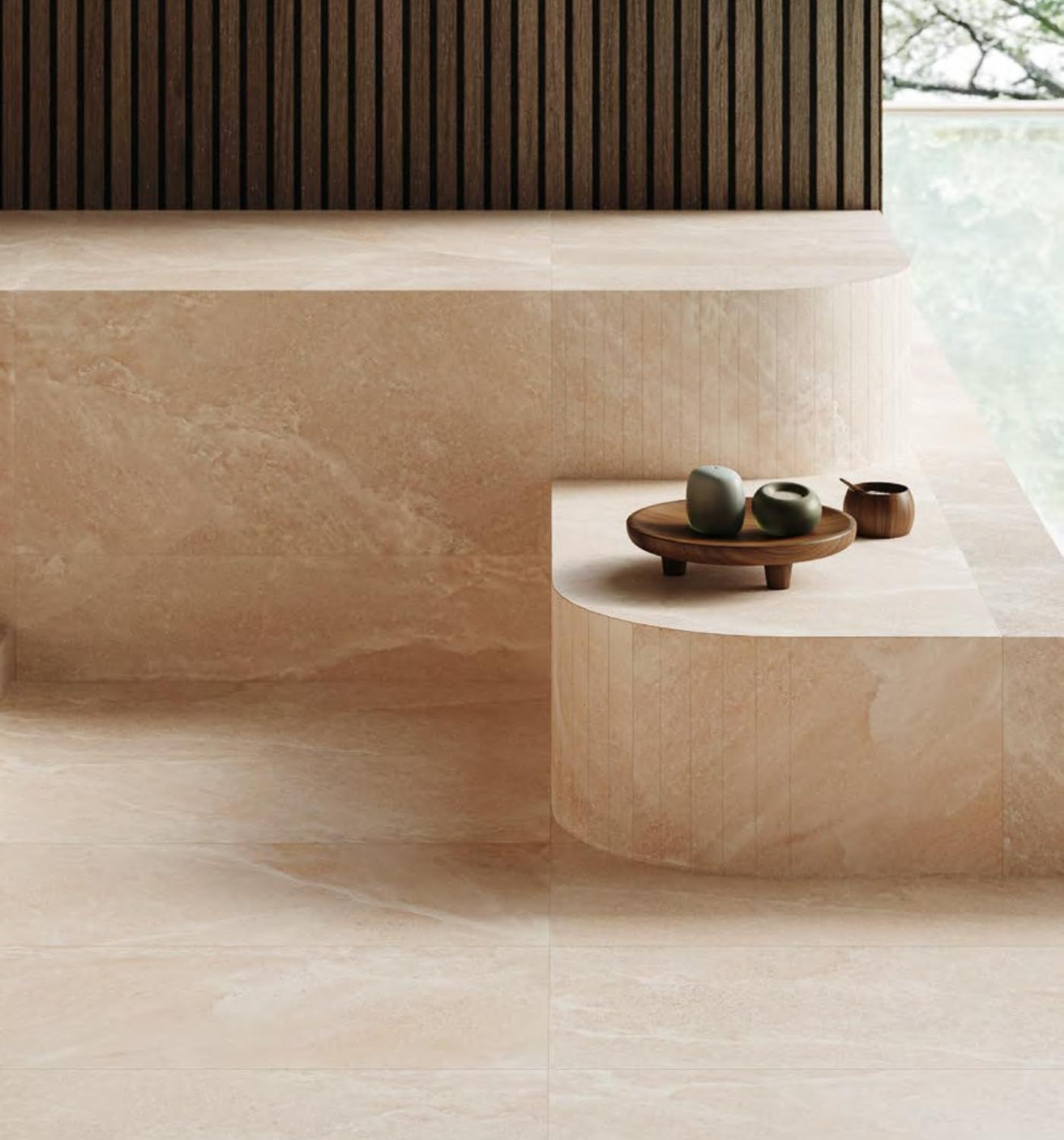
Today’s travertine is being used with far greater precision. Honed and filled finishes bring a smooth, even surface to floors, walls and bathrooms, while vein-cut and cross-cut slabs offer very different expressions of the same stone: linear and calm, or cloudy and organic. Tumbled and brushed textures add a softer, more rustic note to terraces and courtyards. Paired with timber, brushed metal and plaster, it brings warmth to minimalist schemes without competing with them.
Specified well, travertine ages with grace. Choose the cut and finish to suit the room’s traffic and light, plan for sealing and care from the outset, and let the stone carry the detail rather than the pattern.